Southern Europe has become one of the most closely watched regions in student housing — attracting growing capital, generating headlines, and prompting real questions about what it takes to succeed in markets that are structurally compelling but operationally demanding. In this piece, Rocio Pineda of Stoneshield shares her perspective ahead of the Student Housing Conference, drawing on the firm’s active presence across the region. From the supply-demand dynamics shaping the opportunity today, to the platform capabilities required to deliver returns tomorrow, Rocio sets out why Southern Europe rewards investors who combine local conviction with genuine operational depth — and why execution, not capital, is now the defining differentiator.
You’re active across Southern Europe, one of the most talked-about PBSA regions today. How do you see the market performing, and what makes it distinct from others?
Southern Europe continues to benefit from strong structural demand drivers: growing student mobility, rising expectations around quality and professionally managed housing, and a persistent shortage of purpose-built stock. What makes the region particularly compelling is the extent of the supply-demand imbalance. Relative to more mature markets such as the UK or Germany, PBSA in Southern Europe is still earlier in its institutional development, which creates a more pronounced opportunity set. At the same time, it is not a market where capital alone is enough. Success requires local sourcing capability, comfort navigating fragmented planning systems, and a more hands-on approach and intense operational implication in sourcing and execution. In that sense, Southern Europe offers both strong secular tailwinds and a higher barrier to entry. For investors with the right local footprint and operating intensity, that combination can be very attractive.
Southern Europe has seen significant investor interest in recent years. How do you see the market evolving from here, are we still in a structural growth phase, or starting to see signs of normalisation?
We would still characterise Southern European PBSA as being in a structural growth phase. Despite growing capital inflows and a broader market visibility, the underlying fundamentals remain compelling: demand continues to outpace supply, and even with a growing development pipeline, most key cities across the region remain meaningfully undersupplied. What we are seeing is a gradual shift towards greater selectivity. As the market matures, returns are likely to become dependent on selectivity or location quality, excellence in execution, and operating capability, rather than on capital availability alone.
Zooming out from individual markets, how does PBSA fit within your broader living strategy, and how do you think about the role of student housing within a wider residential platform?
We see PBSA as a core component within a broader living strategy. It offers strong fundamentals driven mainly by mobility but also complements other residential segments in terms of lifecycle and demand patterns. More broadly, we approach living through a platform lens. Across student housing, flexible living, or other residential segments, there is meaningful overlap in the capabilities that matter most: sourcing, development, and operations. That creates real advantages in terms of scale, knowledge transfer and operational infrastructure. PBSA is a natural entry point in that context, given its operational intensity and the importance of service delivery.
As the sector matures, what are the key constraints to scaling PBSA platforms today, for example planning, delivery, operating model, and how are you addressing them?
The main constraints remain on the supply side. Planning processes can be lengthy and have a degree of uncertainty, construction timelines tend to be long, and the availability of well-located sites in core university cities remains limited. Over the years we have built deep relationships across the industry experts–developers, landowners, operators, and local advisors – that give us visibility on many opportunities before they reach the broader market. This proprietary deal flow is one of our key competitive advantages, allowing us to be selective which, paired with agility, positions us at the forefront of the industry. Being recognised as a reliable counterparty has been instrumental in building this network. The other critical piece is the operating model. Scaling PBSA successfully requires more than assembling assets; it requires building or accessing robust operating platforms that can deliver across development, leasing, and day-to-day operations. Having the right platform in place is critical to unlock the full potential of real assets. We leverage economies of scale and institutionalised property management to extract the full operational upside of the assets.
It seems that in PBSA, execution and operational capability are especially critical to delivering returns. How important is the platform and operating model in this sector, and how do you approach this at Stoneshield?
We believe the platform and operating model are central to the value creation in PBSA. The drivers of returns in real estate have changed materially. In the last cycle, a significant portion of performance was driven by a supportive macro backdrop – low rates, compressing yields, and ample liquidity – which rewarded capital deployment more than active management. That environment no longer exists, and as result, performance is increasingly differentiated at the manager level. Today, and going forward, we believe value will be created primarily at the asset level, through the ability to grow income from the right assets, deliver with quality, cost control, and continuously optimise how each property is operated. This dynamic is especially acute in operational segments like PBSA, where performance depends on how effectively the asset is managed day to day – pricing, occupancy, renewals, ancillary revenues, maintenance, and the quality of the student experience all feed directly into the balance sheet or financial performance. The building is only part of the equation; the operating platform around it is what ultimately determines the return profile. At Stoneshield, we have built our approach and platform around that conviction. We stay closely involved across the full lifecycle, from acquisition, and development through to asset managementand day-to-day operations, and we invest behind the capabilities required to drive operational outperformance. That includes experienced local teams, institutional processes, data and technology infrastructure, with the end user at the centre of every decision. We believe that is the most durable way to generating returns in PBSA: by creating value through execution, rather than relying on market tailwinds or bullish cycles to do the work for you.
Ahead of the Student Housing Conference we sat down with Georgie Drewery, Senior Account Executive at Yardi, to get her take on the biggest challenges facing PBSA operators today — from rising costs and AI adoption to student welfare and the evolving regulatory landscape.

The rising cost of running a student accommodation business is well-documented. What’s the biggest operational challenge facing PBSA operators right now?
It’s about balancing rising operational costs while still maintaining a high-quality student experience. And when we talk about costs, we mean utilities, staffing, maintenance — all of those are increasing. But at the same time, student expectations are also rising, and technology plays a part in that too.
What’s interesting is that we’re seeing a shift away from simply trying to reduce costs, and more towards improving operational efficiency. Operators are becoming much more focused on streamlining processes. just this year when attending industry events, the messaging has been similar across the board. People are talking about stepping back to look at their current processes, rather than just trying to fix a problem. Working out what they’re doing today so they can make it more efficient — removing manual tasks and really using the data they already have in their systems to make better decisions going forward.
From a Yardi perspective, the real opportunity is in connecting operations end to end — from leasing through to maintenance and all the way through to finance — so teams aren’t duplicating effort, can operate more efficiently, and ultimately scale more quickly.
Student welfare has become an increasingly prominent topic in PBSA. How are operators approaching this now?
There’s been a clear shift in recent years — and I think COVID played a part in that. There was always an element of student welfare, but it was really heightened during the pandemic when operators had to actively check in on their students. Now, welfare is no longer treated as an add-on. It’s becoming a core part of the operational model — and it’s a genuine USP too, as still, not all operators see this as a priority one.
We also need to remember the buying process. Nine times out of ten, there’s a parent or guardian involved — someone asking, “Where is my child going to be living?” So, welfare absolutely feeds into that decision.
Operators are recognising that wellbeing, community and engagement directly impact retention, reputation, and ultimately long-term performance. It’s being embedded into everyday operations — from how teams communicate with students to how it’s tracked and measured.
From a technology perspective, Yardi plays a supporting role here. Take the student app or the CRM — if you can identify early signs of disengagement, like a student who has stopped communicating, stopped responding, stopped signing up to events through the app, that’s a nudge to go and check in on them. It’s about creating an environment where the student feels connected and supported, not just accommodated.
How mature is tech adoption in PBSA today, and where does AI fit into the picture?
Something I’ve been discussing a lot recently is that many businesses think AI should sit with the IT team. I strongly disagree. AI isn’t IT-specific — it has the potential to help every part of the business, from marketing to student services to finance. It needs to be adopted across the whole organisation, not siloed in one department.
In terms of maturity, I’d say it’s still early days. Some operators are highly advanced — fully integrated platforms, strong data strategies. Others are still working through fragmented systems and manual processes. And the reality is, AI won’t work properly without clean, visible data. That’s the foundation.
What’s shifted is the conversation itself. It’s no longer about whether to adopt technology. It’s about how to use it effectively across the whole business.
The areas where I’m seeing AI make the most impact right now are customer service, leasing, and maintenance. That means automating responses to enquiries, removing manual intervention at the front desk, and using data to predict maintenance issues in a building before they happen — being proactive rather than reactive.
But the biggest barrier remains data quality and system integration. AI is powerful, and we’re all still learning. Everyone’s a little nervous about it — understandably — but without clean, connected data as the foundation, it’s very difficult to scale.
Finally, as the UK regulatory landscape continues to evolve, what should operators be focusing on?
With things like the Renters’ Rights Bill coming into effect — even with the PBSA exemptions in place — there’s increased scrutiny around transparency, compliance and student communication. At Yardi, we’ve done a lot of work to ensure our solution is ready and compliant. But for operators, the focus really needs to be on processes: making sure they are robust, auditable, and that you have clear visibility across the whole portfolio.
This is where a centralised platform becomes really important. It allows the whole team to track activity, maintain compliance and adapt quickly as regulations evolve. That’s the power of having one connected tech stack.
And my broader recommendation would be this: the operators who will succeed over the next few years are the ones who treat operations, student experience and technology as a single, connected strategy — not as separate conversations. That’s the mindset shift that I think will define who comes out ahead.
Georgie Drewery is Senior Account Executive at Yardi. This interview took place at the Student Housing Conference 2026.
Emily Aduah, Director of Analysis at StudentCrowd, speaks ahead of her appearance at the Student Housing Conference 2026. Drawing on one of the sector’s most comprehensive student review and data sets, Emily shares what the numbers are really telling us — and why the industry needs to listen more carefully to the student voice.

The student housing market has been through significant change. What are the biggest shifts you’re seeing right now?
I think we are seeing the end of the easy growth era. In previous years, high demand meant you could succeed in many markets with what you could call a fairly mediocre product — the demand was there, so it looked all right. But what we saw in 2025–26 was a real shift across a lot of dimensions.
One of the indicators we track closely is incentives — this tells us a lot about how markets are responding to changes in student behaviour, and what operators are doing with their strategies to fill beds. We saw a significant numerical shift in 2025–26 that is clearly visible in our data. To give you a concrete example: Coventry has been a challenging environment for a few years and has consistently shown high incentive levels — that was broadly expected behaviour. But in 2025–26, three cities overtook Coventry in terms of the intensity of incentives: Sheffield, Cardiff and Brighton.
The minimal baseline we track for market coverage is around 20% — it goes up to around 80% in some cases. Several markets have started 2026–27 with historically high entry incentive rates. That tells you something important is shifting.
Is success in PBSA still all about location?
Traditionally, location topped the leaderboard — everyone knew they had to nail it. Build it in the right place and they will come. But the picture is changing.
We run an annual survey on StudentCrowd tracking student opinion and decision-making over time. Since 2022, the number one priority for students when choosing accommodation has consistently been value for money — not location. We saw that weighting spike sharply in 2024 as inflationary pressures and the cost of living reached their peak, with 83% of students citing value for money as one of their priorities when choosing accommodation.
Location is still there — it’s second place — but our review data tells us it isn’t the most important factor in practice. Students are willing to accept a less-than-perfect location in exchange for other benefits. A good example of this is Edinburgh, where our data shows students rating value for money around 0.5 stars higher than they rate the location — meaning they’re still satisfied overall, even though location is actually a detractor for them.
Beyond that, there’s a theme that comes up again and again in our data: staff and community. Based on more than 250,000 verified student reviews, the phrase “friendly staff” stands out as the most impactful phrase in our entire data set. It drives 95% positive reviews and strongly correlates with better wellbeing support, fairness, transparency, safety, responsiveness and overall accommodation quality. So no — I don’t think it’s all about location anymore. It’s about the product overall, and matching what students actually want from that experience.
How can the market better align itself with the student experience?
The first thing I would say is: you need better, more granular data. What is very clear is that you cannot make meaningful assumptions about the UK market from broad brushstrokes. There is enormous nuance — what’s happening in one city, one building, or even one room type can be entirely different from what’s happening in another. So you need local, granular data to understand what’s actually going on at that level.
The other thing I would say is: listen to the student voice. We talk a lot about numbers — beds, ratios, yields — but we are ultimately in the business of delivering an experience product. The end user has to be satisfied that what we’re offering is actually what they want.
Our data shows very clearly that a lonely building is a leaking building in terms of retention. After staff, the biggest universal loyalty driver is the community experience. Students want to be part of something — and that cuts across all property types, both university and private, across different nominations. Both of those drivers — staff and community — are relational and experiential, not physical. That said, I think it’s worth considering how the need for community might inform design choices when you’re refurbishing or developing a building. How do you build something that’s within budget — because students want value for money — but still meets that need to connect? Squaring that circle is one of the most fascinating challenges the sector faces right now.
If you could give one piece of unconventional advice to someone entering the student housing market today, what would it be?
Focus on building a reliable product. There are clear signals in our data of a shift in student narratives — moving from luxury to reliability. Students are under more financial and academic pressure than ever, and increasingly they view accommodation as a productivity tool, not just a lifestyle choice.
One review I pulled out recently talks about Wi-Fi cutting out at inconvenient times — like when a student needs to submit their essay. That says it all, really. Students are living their whole life in these buildings — studying, working part-time jobs, connecting socially — and the building needs to actively support all of that.
There is also a direct inverse correlation in our data between maintenance lead times and overall satisfaction. It’s very clear: if you install features, you need budget to maintain them. Otherwise they become brand detractors. There appear to be a large number of broken lifts sitting unrepaired in PBSA properties across the country — and students are absolutely paying attention to those things.
One thing I would also highlight is the booking and move-in process. Our data shows that students who have a positive experience of that early touchpoint are significantly more likely to express an interest in rebooking — just that period alone is that impactful.
But if I’m being direct about where to focus resources: invest in your staff. They are the makers of the student experience — by a long way, the number one thing students talk about in reviews. You can slice our data set any way you like, and you will see the word “staff” all the way through.
One of my favourite reviews — and it is, in its entirety, the whole review — simply reads: “Morgan may be the best man at my wedding one day. Big up Francis.” That single review tells you everything about the impact those two individuals had on that student’s experience. To give another example, we saw a staff member help a student navigate a lockout at 3am with a smile — and that one interaction neutralised a potential complaint about a dated room and turned it into a five-star review. That is the power of great staff.
Emily Aduah, Director of Analysis at StudentCrowd, is speaking at the Student Housing Conference 2026 at The Kia Oval, London on 7th May. Find out more at studenthousingevent.com
The UK student housing sector is undergoing a period of meaningful transition. Rising interest rates, affordability pressures, demographic shifts and regulatory change are reshaping how investors, developers and universities think about purpose-built student accommodation (PBSA).
In this in-depth Q&A, Martin Hadland, Founder & Managing Director, of Student First Group shares his perspective on where the real opportunities lie, how demand is evolving, and what the next five years could look like for the sector. Drawing on market data, research insights and hands-on experience, Martin offers a balanced view that recognises both the headwinds and the longer-term fundamentals that continue to underpin student housing.

Where are the real opportunities by location and product type, and what are the biggest structural shifts expected over the next five years?
The last 12 months have been defined by uncertainty and headwinds. We’ve had persistently high interest rates and construction costs in the UK, inflationary pressures that haven’t fully eased, and a wider global backdrop that has made investment stability difficult. All of that has fed directly into decision-making across the student housing sector.
Alongside these macroeconomic factors, we’ve also seen student number issues emerging in certain locations, such as Nottingham and Leeds. In some cities, universities have not recruited the international cohorts they were expecting, which has had a knock-on effect on occupancy levels. What’s been particularly notable is that this has occurred in markets where historically you would not expect to see demand softness.
One of the structural shifts we’re seeing is a much more cautious and targeted approach to development. The days of “build it and they will come” are largely behind us. Instead, decision-making is becoming more forensic, with investors and developers paying closer attention to where demand truly exists and what students can realistically afford. Few markets enable rents that mean development is viable.
From a product perspective, the opportunity increasingly sits in mid-market and repositioned assets, rather than new-build schemes at the very top end of the rental spectrum. Cost pressures mean that delivering new PBSA at rents that stack up for both students and investors is challenging in many locations. As a result, attention is shifting towards existing stock that can be upgraded, reconfigured or managed more efficiently to deliver better value. Over the next five years, this shift towards smarter asset management, refurbishment and differentiation is likely to become more pronounced, particularly as supply and demand in several core markets move closer to parity.
How are regulatory and legislative changes influencing the market?
Regulation is becoming a bigger part of the conversation. PBSA that is linked to universities where they issue the residential agreement is typically covered by licences rather than tenancies, but broader legislative changes still shape how people think about risk and opportunity.
The Renters Rights Act is due be in force by the time of the conference, and even though PBSA blocks are not directly affected, it’s influencing sentiment across the wider residential and student housing markets, and could impact the student accommodation provision in the HMO sector. The interaction between University nominations and the RRA needs careful analysis to assess whether tenancies created are Assured Periodic Tenancies or not. There will also be a transition period as the impact of the new legislation settles.
Affordability is also increasingly becoming a planning consideration. We’ve already seen this in London, where the London Plan has required a proportion of student accommodation to be delivered at affordable rent levels in order to fast-track applications. Planning authorities elsewhere are beginning to explore similar approaches, even if they’re not yet fully embedded in policy.
York is one example where policy has gone further, with applications needing support from one of the city’s universities. While the intent is understandable, the implementation has raised questions about what that support actually means in practice. These kinds of policy interventions will need refinement if they’re to genuinely support delivery rather than create unintended barriers.
Finally on policy, the emerging EPC-C requirement for private rented properties could be a material capex consideration for some properties, affecting both HMO competitiveness and PBSA asset valuations, and is already influencing investment decisions.
What are the key growth themes emerging in the student housing sector?
One of the more interesting growth themes is the changing profile of international students. Overall international enrolments in 2024-25 fell 6.1% on the previous year — a real headwind for university finances — but there are important shifts within that mix worth watching.
Take the US. Total enrolled American students stood at around 23,500 in 2024-25 according to HESA — a relatively modest increase on the prior year. The more compelling story is at the application level: UCAS data for the 2025 entry cycle showed US undergraduate applications up nearly 12%, though that growth rate has already moderated to around 3.5% at the 2026 entry January deadline. Whether the political environment in the US drives a sustained “Trump surge” towards UK universities remains genuinely uncertain — and at least one vice-chancellor has publicly cautioned against over-relying on it. In absolute terms, US undergraduates remain a small cohort of under 7,000 acceptances, though a disproportionately high-value one.
The bigger international story is China. China remains the top sending country by a large margin, with undergraduate applicants up over 10% for 2026 entry — a meaningful positive for many institutions after years of volatility. That rebound, combined with continued growth in Indian applicants, suggests the international picture is stabilising in some markets even as it contracts in others.
We’re also seeing students increasingly living in build-to-rent (BTR) schemes, particularly in cities like Manchester, as well as in co-living environments. The boundaries between PBSA, BTR and co-living are becoming more blurred, although one of the challenges is that reliable data in this area is still limited.
Firms like CBRE, which do a lot of BTR valuation work, have some insight into the number of students living in different types of accommodation, but beyond that the data set is relatively thin. That makes due diligence and market understanding even more important.
Another key theme is the financial distress facing many universities. Some institutions are looking to “grow their way out of trouble” by competing more aggressively for students. However, they’re often competing for the same pool, which isn’t projected to grow dramatically.
One way universities are trying to differentiate themselves is through accommodation guarantees, which can be a powerful recruitment tool. This, in turn, creates opportunities for partnerships between universities and accommodation providers over the coming years.
Finally, we are noticing increases in the volume of commuter students. There has always been a percentage of students that prefer to live at home for financial or other reasons, but there seems to be an increasing number that perceive the value of a degree to be worth the tuition fee, but not the accommodation cost in addition.
Where is the UK student housing market headed?
This is probably the hardest question to answer definitively. You can look at the market through either an optimistic or pessimistic lens, and both are valid to an extent.
On the positive side, demand for student accommodation is still growing, albeit slowly. Supply growth is being throttled by viability challenges, planning constraints, higher borrowing costs and more stringent funder due diligence. That balance creates opportunities, particularly in well-located markets with strong universities and proven demand.
There is also a strong market emerging for second-generation and even third-generation assets that need repositioning or investment. Some owners may be unwilling to commit the capital required for refurbishment or defensive spend, creating opportunities for specialist buyers who are prepared to do so. This is likely to lead to a more clearly defined two-tier market.
At the same time, high interest rates are suppressing transaction volumes. If investors can achieve close to 4% on relatively low-risk savings, the additional return required to justify development risk becomes harder to justify. That inevitably affects appetite and pricing.
Despite this, student housing still compares favourably with many other asset classes. Annual rent uplifts – even when they’re below CPI – provide a level of income visibility that is attractive, particularly when combined with relatively stable long-term demand.
Looking ahead, affordability is likely to remain a central issue, both politically and socially. With a Labour government, themes such as social mobility and access to education are likely to shape future policy. Planning authorities are already beginning to reflect this in how they assess student housing schemes.
Student finance will also play a role. Concerns around earlier loan types, where borrowers are repaying but balances continue to rise due to high interest rates, could influence future participation and behaviour. Where student loans “settle” over time will matter.
Universities are struggling more than ever financially, and we are seeing capital investment into academic projects with the Office for Students indicating that nearly three quarters of universities could be return an operational deficit in the current year. We are about to release research on the current financial requirement to improve the condition of university owned accommodation and in my view it is inescapably clear that we will see more and more university/private partnerships, be that nominations, joint ventures or DBFO style transactions.
Finally, broader housing pressures cannot be ignored. The UK is still projecting significant population growth, while new housing delivery continues to lag behind demand. That wider housing stress is likely to push more students towards PBSA and away from HMOs, particularly as legislative changes make life harder for small private landlords.
Most commentators were expecting lending rates to ease and stabilise around 3% over the next two years, which would help support renewed activity. However, geopolitical risks remain a wildcard that could quickly change that outlook, and the impact of the war in Iran undoubtedly pushes the likely trend down to those levels further into the future.
Final thoughts
The UK student housing market is not without its challenges, but it is far from broken. The sector is maturing, becoming more data-driven and more focused on value, affordability and long-term fundamentals. For those willing to look beyond headline risks and understand the nuances of location, product and demand, opportunities remain very much on the table. And I see partnerships being the primary delivery vehicle for university connected projects.
Ahead of LD Events’ Student Housing conference at the Kia Oval this May, this blog considers how changing student behaviour, affordability pressures and a more selective market are reshaping the PBSA sector, and why design-led optimisation will be critical to future performance.
By Nick Riley, Managing Executive Director at Whittam Cox Architects
PBSA is not in crisis. But it is being forced to adapt.
Ahead of this year’s Student Housing conference, one thing feels clear: the UK PBSA sector is no longer a market where every asset can rely on the same formula for success. Nationally, the fundamentals remain stronger than some headlines suggest, with investors still active and supply constrained in many leading cities. But performance is becoming far more selective, and some secondary markets are clearly under pressure. The sector is increasingly separating into winners and losers, shaped by location, university strength, room mix, amenity offer and price point.
That matters because student behaviour is changing. More UK students are choosing to live at home, while affordability pressures are becoming more acute. For operators, the issue is not that demand has disappeared, but that it is becoming more value-conscious, more segmented and less tolerant of paying premium rents for tired or inflexible stock. Students have more choice, greater scrutiny over cost and higher expectations of what constitutes value.
For the sector, this creates a significant design challenge. In many cases, the response cannot simply be to refresh finishes or add headline amenity. The real opportunity lies in asset optimisation: improving the accommodation offer and student experience while also supporting rental performance, occupancy and long-term investor returns.
In practice, that means looking beyond cosmetic interventions. The most valuable changes are often spatial and strategic: rebalancing amenity, rationalising circulation, upgrading underperforming communal space, improving accessibility and testing whether room mix still aligns with the market. It also means asking more difficult questions about the bedroom product itself. If a standard en-suite at £220-plus per week is becoming harder to sustain in some markets, what alternative typologies can deliver better affordability without eroding experience?
This becomes especially relevant when considering commuter students, shorter-stay patterns and more flexible occupancy models. More UK students are choosing to live at home: UCAS says 30% of UK 18-year-old applicants planned to do so in 2024, rising to 31% in 2025, up from 22% a decade ago. As this cohort grows, the design response has to go beyond simply providing a room for two or three nights a week. The more important question is how buildings can create connection. How can commuter students feel part of a community when they are there? How can the design of shared spaces, circulation, programming and residential touchpoints help create a sense of belonging that extends beyond campus and academic life? These questions are becoming central to the future relevance of PBSA.
Affordability is where the issue becomes most urgent. If students are less willing or less able to absorb higher weekly rents, then the design response cannot be superficial. Operators may need to think more creatively about shared typologies, rebalanced amenity, room-size strategy and more flexible use patterns. The aim should be to create assets that are both more resilient commercially and more responsive to how students now live.
Of course, delivering that change is rarely straightforward. Planning use, taxation, compliance and operational constraints all shape what is possible. The Building Safety Act is also a material consideration, particularly given that a large proportion of PBSA stock falls within the higher-risk building category. For many existing assets, this makes change more complex, more heavily coordinated and more time-consuming to realise.
That is why the sector needs joined-up thinking. The challenge for PBSA is not whether demand still exists, but whether assets are designed, priced and operated for the demand that now exists. In a more selective market, optimisation is no longer a nice-to-have. It is the route to resilience.
As the sector comes together at LD Events’ Student Housing conference this May, the most valuable conversations will be those that move beyond short-term trading conditions and focus on how we futureproof assets through better design. In today’s market, the schemes that succeed will be the ones that combine commercial realism with a clearer understanding of what students need, what operators can sustain and what buildings must now do better.
Ahead of the Retirement Living and Care Homes UK conference on December 4th we sat down with Verity Knight and Anthony Oldfield of conference sponsors JLL to discuss the current state and prospects of these sectors. Verity shared her expertise on the Care Home market and Anthony on Retirement Living…
Q1: What’s the current state of the care home and retirement living sectors?
Verity:
The care home sector is seeing exceptional levels of capital inflow, with total healthcare investment volumes approaching £10 billion so far this year and a further £2 billion anticipated before year-end. This is nearly triple the 2024 figure and significantly above the five-year average. Much of this momentum is being fuelled by major US real estate investment trusts (REITs) such as Welltower and Omega, who are drawn to the sector’s resilience during economic uncertainty. Operationally, operators have shown remarkable resilience, and constraints on new developments have exacerbated the supply demand imbalance which in turn strengthens the position of existing stock.
Anthony:
In contrast, the retirement living market is still maturing and has faced a slower year, largely due to a sluggish residential property market and ongoing economic headwinds. However, there have been significant moves, such as the merger between Audley and Elysian, which will create a platform of 26 operational villages. This year has been more about laying the groundwork for future growth, with expectations of increased activity in 2026.
Q2: How are investors approaching these sectors, and what trends are emerging?
Verity:
Investor sentiment remains positive , especially among international players. North American capital has played a major role in recent UK deals, with Welltower acquiring several leading operators and Care Trust REIT making a notable entry into the market with their acquisition of Care REIT plc (formerly Impact). Omega along with Foundation Partners and Deer Capital are also doubling down on the sector.
US REITs are increasingly adopting more flexible ownership models, enabled by RIDEA legislation, which allows them to acquire wholcos and be more hands-on with operations. The rise of management contract structures—long established in the hotel sector – has enabled investors to boost returns by being more directly involved in driving efficiencies through consolidation and integration of tech initiatives.
Investors are showing interest across the full spectrum of the market, from premium assets to more secondary stock, but we have witnessed a growing appetite for mid-market opportunities that offer potential for refurbishment and repositioning. An example of this and a key highlight for the JLL team was acting for Fraklin Templeton on the acquisition of the LDC portfolio, a portfolio of 32 care homes which were formally leased to Four Seasons before they were transitioned to six alternative regional operators.
Demographic fundamentals continue to underpin the investment case: the number of people aged over 85 is set to rise sharply by 2050 as the baby boomer generation reaches 80 years of age, ensuring ongoing demand for care services. At the same time, viability challenges and limited new development has created a supply-demand imbalance, which benefits existing operators. ESG (Environmental, Social, and Governance) considerations are also increasingly important, with investors attracted by the sector’s strong social impact credentials and opportunities for sustainable refurbishment.
Anthony:
Investors remain positive about the retirement living sector but there has been limited investment activity this year. There are a number of large processes ongoing/ under offer which highlight the strength of demand in the sector- two of these are being undertaken by JLL – one is the largest retirement rental portfolio in the UK and the other a mixed tenure portfolio where bidders are looking to pivot it to a rental model. These transactions will be the start of many more to come over the next few years and shows that investors continue to focus on long term income and remain keen to back the right opportunities.
Q3: What’s needed for Integrated Retirement Communities (IRCs) to achieve scale, and is the business model fit for purpose?
Anthony:
The retirement living sector is moving towards two dominant models:
- Compact, urban schemes focused on rental tenures
- Larger, lower-density villages in rural settings, typically for sale with deferred management fees
Achieving scale will likely depend on further consolidation. At present, McCarthy Stone is the only major player with significant operational scale, while others remain relatively small. The recent Audley-Elysian merger is a sign of things to come, and more mergers and acquisitions are expected as the sector matures. This consolidation will give both investors and operators greater confidence, as it creates clearer exit routes and opportunities for growth.
Q4: What lessons can IRCs take from the care home sector’s success?
Anthony:
Three key takeaways stand out:
- Needs-Driven Approach: Care homes have thrived by focusing on essential needs, providing services for those who require support the most. IRCs should move beyond being seen as a lifestyle choice and instead address the needs of older people who aren’t ready for a care home but can’t manage alone.
- Stable Income Streams: The sector should prioritise predictable income, such as rental payments, rather than relying on the ups and downs of the property market. This approach is more attractive to investors and aligns IRCs with other residential sectors.
- Mid-Market Focus: Care homes have succeeded by catering to the mid-market. Retirement living providers who can make mid-market schemes viable have seen strong uptake, both in sales and lettings.
Q5: What’s the outlook for rental-based retirement living?
Anthony:
The future looks bright for rental models in retirement living, which are expected to become a major part of the sector. Some of the most successful portfolios are already rental-based, meeting the growing demand from older people who value flexibility and a stepping stone between their own home and a care home. Rental models offer investors quicker returns and more certainty, while residents benefit from greater flexibility. Leading operators like Moda and Birchgrove are pioneering these approaches, and rental is seen as a promising way to address the mid-market opportunity.
—–
Want to hear more from Antony and Verity? Both are key speakers at our conference on the 4th of December. Don’t have your place confirmed? There are still some spaces available so if you’d like to reserve your place just head along to: https://www.carehomesconference.com/
Over the past 10 years Built to Rent has shifted from a relatively unknown, often misunderstood concept to an integral asset class with a growing understanding of the vital role it can play in housing delivery in the UK. As the sector faces continued challenges in viability combined with an increasingly difficult regulatory landscape what can we learn from the sectors evolution to date and how will it continue to evolve in the future?
The end of the Amenity Space Race?
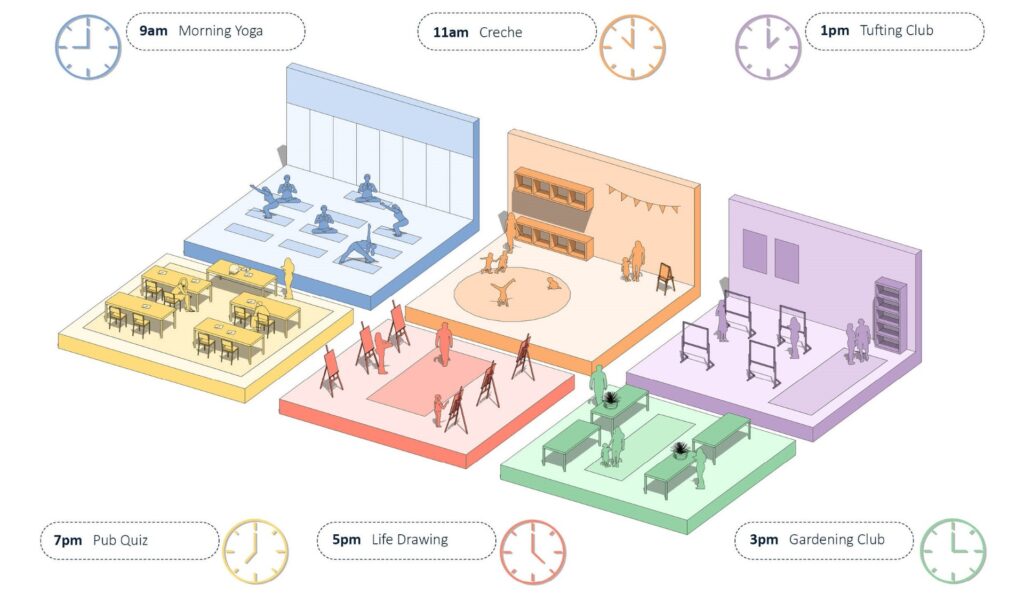
From its outset a key differentiator for the sector has been the provision of high quality, shared amenity space. With the age-old question being how much amenity should we provide? In the absence of a ‘magic number’ this led to an increasing drive the accommodate as much amenity as practically possible. These spaces often manifested in response to the latest trends through specific uses with their own specific spatial requirements. As trends shift and people’s requirements change this has led to underutilised spaces that are difficult to adapt to meet changing needs.
This has seen a shift to a more practical approach to amenity provision where flexibility and adaptability is key. Well designed, flexible spaces can work much harder spatially whilst being adaptable to the changing needs of residents. This is coupled with a shift from the faddy to the practical through spaces that prioritise the functional and convenient. From an increased demand for shared workspace to places for people to host guests away from their apartments without the need for the mandatory tidy up or hassle of the post dinner clean up.
Community not amenity
If amenity space in the attractor, community is almost certainly the retainer of residents. A clear USP of Build to Rent is the ability to foster social connection, belonging and engagement with fellow residents. Whilst the spaces we create have an impact in how they facilitate this its success often comes down to the ongoing curation and management of the living experience. In this context we are also seeing a clear shift from relatively inward-looking Build to Rent developments to schemes that embrace wider context and its community. This can extend to providing amenity spaces that can be used by both the buildings residents and wider community to maximise social interaction and even provide additional revenue.
Evolution to building typologies has also seen a move away from doughnut blocks and sticks on plinths to multi building Build to Rent propositions that place an emphasis on the places and spaces that can be inhabited between buildings. Combining this with a range of different uses starts to provide 24-hour activation and more opportunities for social interaction within thriving mixed use communities people will want to call home.

Social sustainability through mixed tenure development
Is there an opportunity to build on the benefits of providing a range of uses by integrating different living typologies in a more meaningful way? In a world where Build to Rent developments are often inhabited by a range of different demographics could this be expanded further? Is there a model that looks to combine different rental typologies into one place to provide additional social sustainability through the integration of people of different demographics and generations. This could combine Build to Rent, Co-Living, Student Accommodation and Later Living into one holistic proposition. Whilst this could manifest in many different ways however the shared requirements across tenures could lead to greater efficiency in operation, potential for greater flexibility in delivery and security when bringing product to market.
Broadening the typological horizon
Typically, Multi Family Build to Rent developments consist of a range of one, two and three-bedroom homes often targeted towards a younger demographic. In practice we are seeing multiple examples where there is much more variation in the demographic of residents being drawn to the Build to Rent experience. With increased numbers of families or older residents with more disposable income there are examples where the smaller proportion of larger homes are the ones that are in increased demand. But rather than simply increase the number of three beds can we go further in how we expand the range of typologies that a Build to Rent community can offer? This could include townhouses, maisonettes, garden flats or larger penthouse units. The introduction of different types of homes presents the opportunity to provide variety for a range of residents whilst offering a point of difference within an increasingly saturated market of homes where the product is extremely similar.
Making an Apartment a Home
Would an increased ability for residents to personalise their homes and their living experience lead to more people staying and growing within a Built to Rent development? The notion of being able to move through a development as needs change has been around for some time. A single person in a studio moving to a one bed with their partner before moving to a larger home when they start to have a family. But could the ability for a resident’s environment to change with their personal needs and lifestyle occur on a more granular level? Could a shift away from a one size fits all approach to rental living provide greater ability for residents to personalise their space on a more regular basis and allow it to feel like their own home? This could include selecting furniture packs, different interior themes or even modular layouts and adaptable furniture that could be reconfigured over time.
In this exclusive interview, senior planning partner at multinational law firm Pinsent Masons, Iain Gilbey, shares his insights into the evolving landscape of UK planning policy, the government’s multi-layered approach to reform, and what it all means for residential development. From legislative shifts to the practical realities on the ground, this Q&A explores the opportunities and challenges ahead.

Q: How is the government changing the planning system?
A: The current government, just over a year into its term, has adopted a multi-layered strategy to reform the planning system. Central to this is the belief that planning reform is a key lever for economic growth. Housing and infrastructure development are seen not only as ends in themselves but as catalysts for broader economic stimulus.
The flagship initiative is the Planning and Infrastructure Bill, which is still making its way through Parliament. Relevant to residential development, this bill proposes several significant changes, including:
- Allowing local authorities to set their own planning fees to better fund services.
- Mandating compulsory training for elected members on planning committees.
- Delegating more decisions to planning officers to streamline processes.
- Introducing spatial development strategies to support regional planning.
- Enabling further devolution through regional development authorities.
These legislative changes aim to empower development and improve delivery, but they will take time to implement and filter down to local decision-making.
Q: What impact will this legislation have, and when will we see results?
A: Legislative reform is, by nature, a gradual process.. Even once the Planning and Infrastructure Bill becomes law, its practical impact may not be felt for another year or two. The more immediate and pressing challenge lies in the capacity of local planning authorities, many of which are under-resourced and facing difficulties in retaining skilled staff. Without adequate personnel, even the most ambitious reforms risk faltering at the point of delivery.
However, not all change moves slowly. Recent amendments to the National Planning Policy Framework (NPPF)—particularly the introduction of the “Grey Belt” concept—are already driving tangible outcomes. These policy shifts have enabled housing developments and economic development, including data centres to gain approval in areas previously considered unsuitable, demonstrating that targeted adjustments can unlock immediate opportunities.
Q: How is the industry responding to these changes?
A: The industry has broadly welcomed the reforms, recognising their potential to unlock new opportunities for development. While there’s a pragmatic awareness that local authorities may face challenges in aligning with central directives—often due to local circumstances or limited resources—there remains optimism about the direction of travel.
At the same time, developers are increasingly viewing appeals and Secretary of State interventions as effective routes to securing approvals. Angela Rayner’s recent intervention in the Quinn Estates applications in Sittingbourne, Kent, is a notable example. Despite local opposition, the government’s involvement underscored its commitment to delivery. This evolving dynamic suggests that, for some developers, appeals may offer greater speed and certainty in navigating the planning system.
Q: What opportunities do the Grey Belt, Greenbelt, and new towns policies offer?
A: The Grey Belt policy has been particularly impactful. It has opened up areas in the South East of England see by way of example a recent run of successful appeals in St Albans—long resistant to large scale residential development—to new housing schemes. These decisions, some challenged in the High Court, have largely survived the appeal process, indicating strong support for the new policy direction.
In contrast, green-belt sites that don’t qualify as “grey belt” still require developers to demonstrate “very special circumstances” to gain approval. However, if a site can be reclassified as Grey Belt, it benefits from a more favourable planning environment.
As for new towns, the New Towns Task Force is expected to publish its final report in September. While this will identify potential sites for large-scale development, it won’t directly influence planning decisions in the short to medium term. The government has acknowledged that these new towns won’t contribute to its target of 1.5 million homes during this Parliament, underscoring the long-term nature of this initiative.
Q: Are there other significant changes we should be aware of?
A: Yes, one of the more technical but important shifts is the move towards a rules-based planning system. Currently, planning decision making is highly discretionary, with decisions often hinging on subjective interpretations of policy. The government is exploring mechanisms like National Development Management Policy and design codes to reduce this subjectivity. If a proposal complies with these rules, it could be approved more swiftly, offering greater certainty for developers.
One area attracting increased attention is the implementation of the Building Safety Act, particularly in London. In the wake of Grenfell, tall buildings are now subject to more rigorous safety standards, reflecting a necessary shift toward enhanced accountability. The Health and Safety Executive, which oversees this regime, is working to scale its capacity to meet demand—though the volume and complexity of applications have created some very significant delays. For many developers, navigating this process has become a central focus, often taking precedence over planning or viability considerations.
Q: What’s the overall outlook for residential development?
A: We’re undoubtedly in a more pro-development policy environment than before. The government’s messaging and reforms reflect a strong commitment to delivery. However, the gap between policy and practice remains wide. Local authorities’ capacity issues, coupled with procedural delays, mean that change is incremental.
Still, the industry is adapting. Appeals are becoming an often preferred route, and developers are learning to navigate the new rules. Over time, these reforms—especially the shift towards a rules-based system—could reshape the planning landscape in meaningful ways.
Summary
The planning system is undergoing significant transformation, driven by a government keen to stimulate growth through development. While legislative changes will take time, policy adjustments like the Grey Belt reclassification are already making waves. The industry is responding with cautious optimism, balancing enthusiasm for reform with the realities of local implementation.
As Iain aptly puts it, “We’re now operating in a far more pro-development policy environment than we were previously.” The challenge now is turning that policy into delivery.
Ahead of our UK Living Conference in September we sat down with Simon Scott, Lead Director Living Capital Markets at JLL, to get his insights on the current state of the UK living sectors—from investment trends to sectoral growth and the challenges shaping the market.

What’s happening in the UK living sectors right now?
The most active area at the moment is probably single-family housing. You can’t talk about the living sector without mentioning viability—particularly cost inflation, outward yield movement, and the impact of the Building Safety Act. These have made dense, apartment-led schemes more difficult to deliver, which is why single-family housing is gaining traction.
This shift is largely due to the fact that single-family housing avoids many of the regulatory and structural hurdles that come with multifamily developments. While cost inflation still affects all sectors, the absence of high-density compliance issues makes single-family homes more attractive to developers and investors alike. It’s a space where we’re seeing a lot of momentum and innovation.
Where is investment money currently focused?
Due to viability challenges, investors are turning to existing first- and second-generation housing stock—mainly multifamily, with some early interest in single-family and retrofit . Student housing remains active due to its running return, and later living and healthcare have bounced back post-COVID. Co-living is still emerging but offers density benefits that can help with development viability.
Investors have become increasingly cautious, and the ability to underwrite deals with more predictable outcomes is key. Co-living and student housing, in particular, offer higher density and operational efficiencies, which can help offset some of the broader market challenges.
What are the biggest issues facing the living sectors, and have they stalled activity?
Demand isn’t the issue—occupancy levels are high. The real challenge is the relative cost of funds. If you can earn 4% in the bank, you need a higher level of return to justify the risk. There’s also a disconnect between government expectations and the private sector’s risk-reward balance. Education around what drives investment is crucial. Developer and contractor insolvencies have added to the risk profile, making existing opportunities more appealing than new developments. But that doesn’t help solve the housing crisis—we need mechanisms to attract institutional capital into the sector.
There’s also a need for better communication between the public and private sectors. Initiatives like the Build to Rent Alliance (formerly the Build to Rent Task Force) aim to bridge this gap, but more work is needed. Without a clear understanding of the risks and returns involved, it’s difficult to create policies that genuinely support development. The sector needs a more collaborative approach to unlock its full potential.
Which sectors are set to grow in the short, medium, and long term?
Short to Medium Term:
- Single-family housing: Still lots of room to grow at scale.
- Co-living: Evolving and increasingly relevant as a small, affordable housing asset class, though local authorities are still catching up.
Medium to Long Term:
- Later living and healthcare: Driven by demographic trends—an ageing population and lack of bespoke housing products make this a strong bet.
- Student accommodation: Ironically, the youngest demographic is the most mature investment class. It remains a strong, institutionally backed asset.
These trends reflect broader shifts in how people live and what they need from housing. Co-living, for example, is adapting to changing lifestyles and affordability pressures, while later living and healthcare are responding to demographic inevitabilities. Investors are increasingly looking for thematic opportunities, and these sectors align well with long-term societal changes.
What is the next iteration of PBSA?
The residential real estate sector is vast, encompassing a variety of sub-sectors that respond to different demographics, investment strategies, geographical nuances, affordability, and lifestyle preferences. Over time, industry professionals have developed specific terminology to distinguish these sub-sectors, with acronyms such as BtR (Build to Rent), SFH (Single Family Housing), and PBSA (Purpose-Built Student Accommodation) becoming commonplace. But as our society and housing needs evolve, are these names helpful or necessary? Do they provide clarity or constraints?

Residential Sub-Sectors at a glance
Some of the most widely used terms in residential development include.
- Purpose Built Student Accommodation (PBSA) – private/institutionally owned and managed student living, generally with amenity facilities.
- Co-Living – a blend of PBSA and Built to Rent, providing a lifestyle choice with compact apartments and community led amenities with flexible rental options. These are institutionally owned and managed and is a contemporary alternative to PRS shared housing.
- Build to Rent – Institutionally owned and managed rental apartments – also called ‘Multifamily’ in America.
- Single Family Housing – Suburban institutionally owned and managed rental homes. This is challenging the traditional house-builders ‘For Sale’ models.
- Private Rented Sector (privately owned and rented urban or suburban homes)
- Senior or Later Living or Retirement Living – There are many forms of typologies and services for older people which range from community and lifestyle focussed rental to serving the care needs for dependants.
Why Do These Distinctions Matter?
Understanding the various residential sub-sectors helps investors, developers, and policymakers make informed decisions. Each typology has unique market dynamics, risk profiles, and resident expectations. As the housing landscape evolves, clear and consistent terminology can support more effective decision making, improve investment strategies, and ultimately ensure housing solutions that genuinely meet the needs of diverse communities.
Whether you’re an investor exploring new opportunities or simply interested in how housing trends are shifting, recognising these sub-sectors is key to understanding the modern residential market.
Whilst these references appear to matter from a Real Estate investment, Policy and Planning perspective, from a resident’s point of view the picture is less clear. Terms like BtR or PBSA are rarely understood outside industry circles. In the UK, where home ownership remains deeply rooted, rental models are not widely understood, even as preferences shift towards more flexible, community focussed living options.
How could things evolve?
In reality, many of these typologies are beginning to overlap. For BtR for instance now attracts students, professionals, families and retirees.
In response to this terms such as ‘Flex-Living’ and ‘Blended Living’ are emerging. These seem to challenge the notion that people of certain demographics all need to live together and embrace intergenerational, multi need communities built around adaptability and inclusion.
The other important point of distinction here is that residents could change their home preferences within a rental community/neighbourhood they feel part of in a long-term context.
A strong example of this is Birchgrove and Hybr’s 2024 intergenerational living scheme in North London which sees Retirement Homes and Student Living side-by-side.
Research also supports this model; A 2019 UCL study found that increased social contact improves well-being and reduces dementia risk in the elderly. Intergenerational Living boosts older people’s sense of purpose and life expectancy. Conversely younger people also benefit, gaining empathy, wisdom, tolerance, and understanding by connecting with older generations, fostering stronger relationships and mutual growth. Based on this, could more dynamic housing models positively impact some of our bigger society and welfare challenges?
Flexible Housing for Evolving Lives
Could housing evolve with its residents? This concept involves a dynamic development arrangement that adapts to an its residents evolving needs over time. Initially, a student might occupy a bedroom or apartment designed for their specific requirements and budget. As their lifestyle changes, they could transition into a next stage Co-living offer, then progress to a larger shared apartment. They could then transition into a family-oriented home and, later, to a residence more suited to the needs of older adults—offering flexible space options.
How would this model manifest within a building, or arrangement of buildings? Does everyone have a separate entrance? Are the homes stacked vertically or horizontally across the building? Importantly, how would this model work from an investment perspective? Could it be a more effective and optimised investment model?
What’s Next?
As housing needs continue to evolve, it may be time to reassess how we define and distinguish residential sectors. The tension between what residents really want and need, and how that’s labelled and marketed, vs what works from an investment and policy perspective will ultimately determine how ambitious and creative we can be. Personally, I feel societal needs are continually evolving and maybe we need to break some of the silo’s which have been formed to test the provision of resilient and responsive homes for all.
I think the notion of UK PBSA being a defined and distinct typology, as it has been for the last twenty-five years in the UK, could and should be challenged if the sector is to continue to evolve and ensure long-term sustainability.
Nick Riley is Managing Executive Director at Whittam Cox Architects, who are corporate supporters of LD Events. Hear more from Nick on 13th May at the Student Housing 2025 Conference in London. To book tickets please visit www.studenthousingevent.com